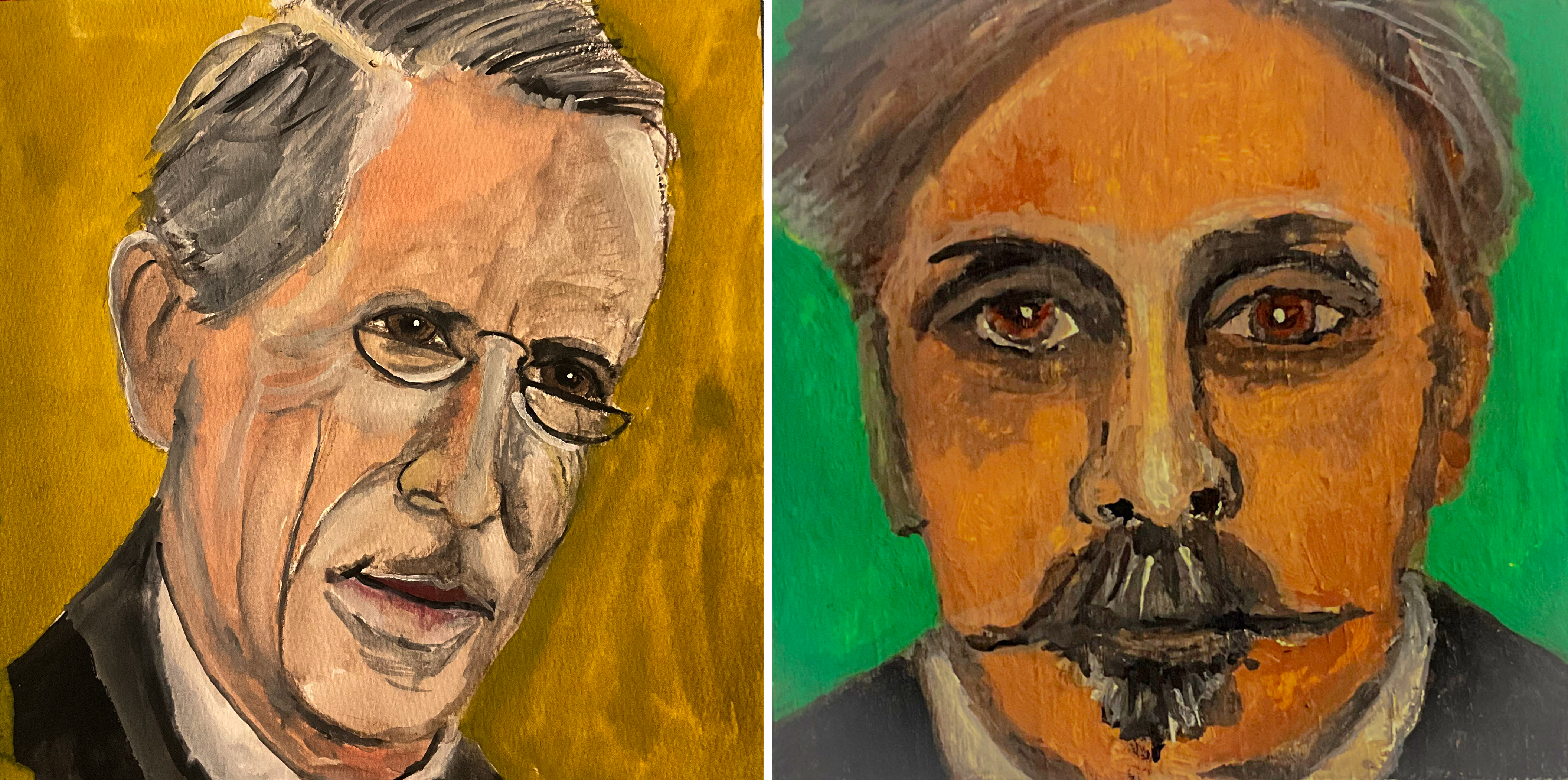
[ChatGPT Prompt: Create an imaginary conversation between Pierre Teilhard de Chardin and Gabriel Fauré in which they discover common ground in their respective creative output.]
(A quiet salon in Paris, sometime in the early 20th century. The fire crackles gently, and the air carries the lingering sound of a recently played piano melody. Teilhard de Chardin, the Jesuit paleontologist and philosopher, sits in a high-backed chair, his hands clasped before him. Gabriel Fauré, the renowned composer, leans slightly forward, eyes bright with curiosity.)
Fauré: (smiling)* Père Teilhard, I must confess, I have read some of your writings, though I am but an amateur in the sciences. Yet something in your vision of the world resonates with me, as if it were a symphony waiting to be played.
Teilhard: *(nodding)* And I have often thought that music, in its own way, expresses the great unfolding of spirit and matter—what I call the “Omega Point,” the ultimate convergence of all things. Your Requiem, for instance, seems to reach for something beyond mere sound, something transcendent.
Fauré: How interesting! Yes, I sought in my Requiem not the fire and brimstone of judgment, but a kind of luminous peace, a gentle ascent of the soul. You speak of evolution as not merely biological but spiritual, yes?
Teilhard: Precisely. I see the universe not as a cold mechanism but as a living, breathing organism, moving toward higher consciousness, toward union with the divine. And your music—does it not, in its harmonies, suggest a similar ascent?
Fauré: You put it beautifully. I have always been drawn to simplicity, to a sense of warmth and quiet revelation in sound. Some might call it modern in its restraint, but I believe it is merely another way to express the deep longing of the soul.
Teilhard: That longing is what propels evolution itself. Every being, every thought, every note of music participates in this great movement toward fulfillment. Your melodies, I believe, are not mere arrangements of sound but echoes of this universal progression.
Fauré: Then perhaps we are not so different in our work. You, with words and ideas, seeking the divine through the fabric of the cosmos, and I, with melody, striving to give voice to that same yearning.
Teilhard: Yes! Both science and art, when pursued with sincerity, become acts of worship, acts of discovery. We are, each in our own way, unveiling the hidden harmony of creation.
*(The fire crackles again, and Fauré, after a pause, turns to the piano and begins to play the ethereal opening of *Pie Jesu* from his Requiem. Teilhard listens, eyes closed, sensing in the music the very motion of the cosmos he so passionately seeks to understand.)*

 The Pocket Universe